The Ombudsman found Croydon charged a woman for care the law says is free. Her family sold her house to pay. It must now repay £75,000 with interest.
Croydon Council has been ordered to repay around £75,000 in care home fees to the estate of a woman who should never have been charged for her care at all.
The Local Government and Social Care Ombudsman upheld the complaint on 29 June 2026. It found the council failed to identify and review the woman’s entitlement to free aftercare under the Mental Health Act, and that her family sold her house to pay bills that public funds should have covered (decision 25 008 126).
The Ombudsman anonymises the people in its decisions. The woman is called Mrs X and her grandson, who complained, is called Mr K. He held power of attorney for her health, welfare and finances. She died in April 2025, before the council accepted it had got it wrong.
What the Ombudsman found
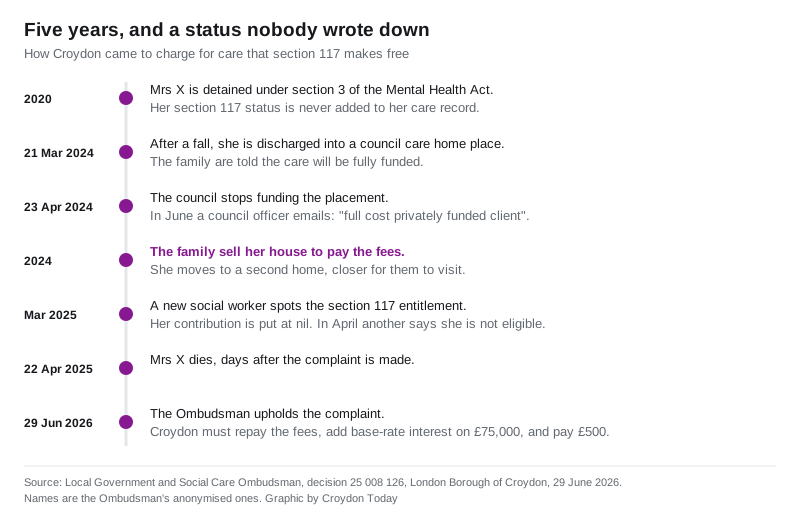
The decision sets out a five-year gap in the council’s own records:
- 2020. Mrs X was detained in hospital under section 3 of the Mental Health Act. The council says it wrote to her on discharge explaining she was eligible for section 117 aftercare funding for homecare services. She declined those services. Her family have never seen that letter.
- 21 March 2024. After a fall at home, Mrs X was discharged from hospital into a care home arranged by the council. The family were told her care there would be fully funded.
- 23 April 2024. The council stopped funding the placement and told the family it would be privately funded from then on. Mr K says he was told that because Mrs X owned her own home, she would have to pay for her own care.
- June 2024. A council welfare information officer emailed to say: “The financial assessment team have determined that you are full cost privately funded client with no financial support from the council.”
- After that. The family sold the house and moved Mrs X to a second care home, closer for them to visit.
- March 2025. A new social worker read the case and noted that Mrs X was eligible for section 117 aftercare funding. A finance officer wrote to tell Mr K her contribution towards her care was nil.
- April 2025. A different social worker reassessed her and concluded she did not meet the section 117 criteria. Mr K complained. Mrs X died on 22 April.
The council’s own files showed why nobody had spotted it. Mrs X’s section 117 status “had not been included on her record”. The Ombudsman also noted that the panel deciding the funding for her 2024 placement “does not appear to have been aware of her s117 status, which might have led to a different outcome then”.
When Mr K found out, he wrote to the council: “we asked for her funding to be paid for and the last social worker said she was not eligible. Because of this, we have had to sell her house and incurred fees way in excess of her care”.
The rule the council missed
Section 117 of the Mental Health Act 1983 places a duty on councils and the NHS to meet the needs of people who have been detained under certain sections, including section 3. The point that matters to families is short: aftercare provided under section 117 cannot be charged for.
The statutory Code of Practice says that aftercare can include accommodation, and that it continues for as long as the person needs it. It also requires councils and NHS bodies to keep a record of who they provide aftercare to and what those services are. That record is what was missing here.
Croydon’s own charging policy states the rule plainly. Paragraph 3.26 lists the circumstances in which care that would normally be means tested is instead provided free of charge, and the second of them is where “the person is eligible for aftercare services or care and support provided under section 117 of the Mental Health Act 1983” (Croydon Council charging policy, April 2026).
The rule was written down. It was not applied, and it was not recorded.
It is also hard for a resident to find. Checked on 24 August 2026, the council’s public paying for adult social care page does not mention section 117 or aftercare anywhere. It explains the £23,250 savings threshold and the circumstances in which you pay the full cost of care, which is exactly the framing the family were given.
What the council has accepted
Croydon told the Ombudsman its view of Mrs X’s needs “should have been more holistic and taken into account older age frailty related needs as well as needs that were more in line with her mental health condition”. It accepted it failed to review her section 117 status as her needs changed.
The council has agreed to:
- repay the care home fees the family paid, within one month of the decision
- pay interest at the base rate on £75,000, the fees paid from April 2024 onwards
- pay Mr K £500 for the distress and frustration caused
- run in-person staff training on section 117 over the summer of 2026
- redesign its paperwork so a section 117 status is shown prominently, and so that it is clear when the status has been ruled out
The Ombudsman was blunt about the limits of that. “Mrs X has now died and the injustice she suffered cannot be remedied.”
What it means for you
If you are arranging care for a relative in Croydon, the question to ask before any financial assessment is whether they have ever been detained in hospital under the Mental Health Act, and under which section.
- Section 3 is the common one. If someone was detained under section 3 and later needs aftercare arising from or related to that mental disorder, the council and the NHS must provide it free. That can include the cost of a care home place.
- Owning a home does not automatically mean paying. The £23,250 threshold on the council’s website applies to means-tested care. Section 117 aftercare is not means tested at all.
- Ask for it in writing. This case turned on a status that existed but was never written on the file. Ask the social worker to confirm in writing whether section 117 applies, and ask for it to be recorded on the care record.
- A refusal is not the end. Mrs X was assessed as not eligible by one social worker a month after another had said she was. Councils have a two-stage complaints process, and if you are still unhappy you can take the complaint to the Ombudsman yourself, free, at lgo.org.uk.
- A death does not close the door. The Ombudsman investigated after Mrs X died and ordered repayment to her estate, because there was clear evidence of quantifiable financial loss.
If the issue is the bill rather than the entitlement, our guides to Croydon council tax bands and the council’s own charging policy set out how contributions are worked out.
Croydon’s Ombudsman record
The council is not unusual in being found at fault. It is unusual in how long it takes to put things right.
Between 1 April 2025 and 31 March 2026 the Ombudsman dealt with 281 complaints about Croydon. It investigated 47 and upheld 42, an uphold rate of 89% against an average of 88% for similar London boroughs. The council complied with the Ombudsman’s recommendations in all 35 cases where compliance was recorded.
The gap is in the timing. Compliance was on time in 20 of those 35 cases, a rate of 57%, against a 65% average for similar organisations (Croydon’s performance statistics).
Croydon Council has published nothing about this decision on its newsroom, checked on 24 August 2026.
Sources
- Local Government and Social Care Ombudsman, decision 25 008 126, London Borough of Croydon, 29 June 2026 (the complaint, the findings, the quoted emails and the agreed remedy)
- Croydon Council: Adult Social Care Policy, Charging for Adult Social Care, April 2026 (paragraph 3.26, services provided free of charge)
- Croydon Council: paying for adult social care (the £23,250 threshold and full-cost rules)
- Local Government and Social Care Ombudsman: London Borough of Croydon performance statistics, 2025/26 (complaints, uphold rate and compliance timing)
- Local Government and Social Care Ombudsman: how to complain
Have your say
We read every message. To comment on this story, email the newsdesk and we may publish a selection of responses: hello@croydontoday.co.uk.